The 3-Step Baby Care Ritual Your Grandmother Swore By (And Science Now Agrees With)
There’s a scene that plays out in homes across India every single morning.
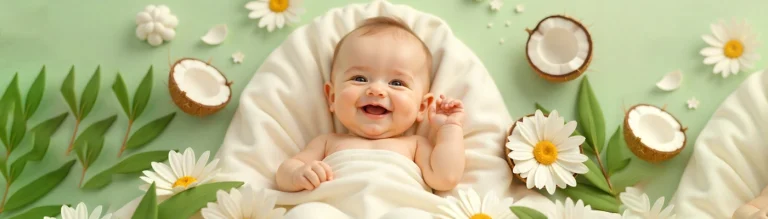
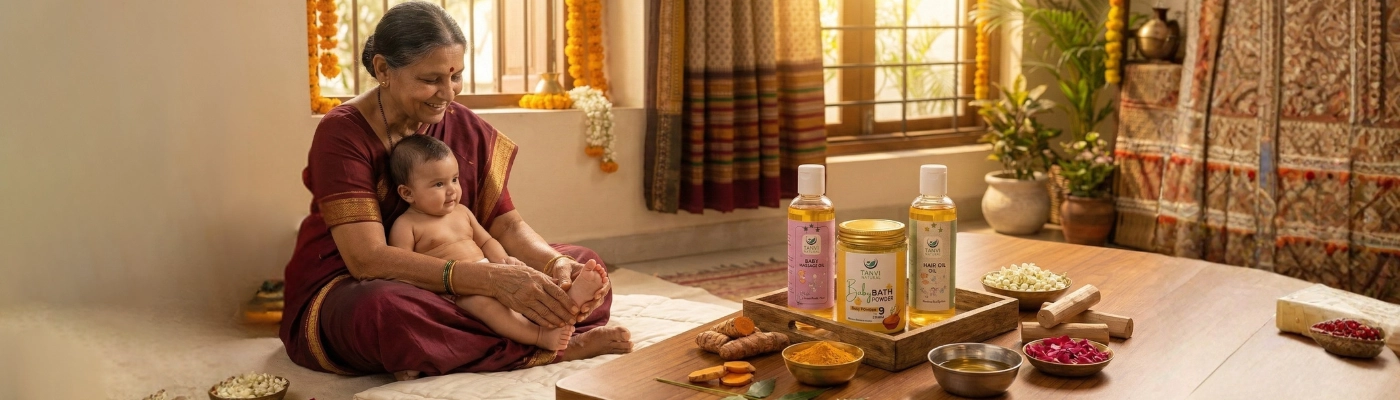
A grandmother — naani or ammamma — sits cross-legged on a mat, a small steel bowl of warm oil beside her. The baby is placed gently in her lap. And for the next twenty minutes, the world slows down. Warm hands move in slow circles across tiny arms and legs. A soft herbal powder is mixed with water or milk. The bath that follows smells of sandalwood and something else — something that has no name but feels ancient and safe.
This was not a “routine.” It was not a “wellness regimen.” It was just how babies were cared for. For generations.
Somewhere along the way, we traded this ritual for plastic bottles with cartoon animals on them. Bottles that promised the world — extra gentle! tear-free! paediatrician approved! — but were quietly full of sulphates, mineral oil, synthetic fragrance, and preservatives your baby’s skin never asked for.
The good news? More and more parents today are finding their way back.
Let’s talk about why this traditional 3-step ritual works — and what each step is actually doing for your baby’s body.
First, A Quick Word About Your Baby's Skin
A newborn’s skin is not just “delicate.” It’s structurally different from adult skin.
It’s thinner — the outermost barrier layer (called the stratum corneum) is still developing for the first year of life. It absorbs more of whatever you put on it. It’s more prone to dryness, irritation, and rashes. And its microbiome — the protective ecosystem of good bacteria on the skin surface — is only just establishing itself.
This is exactly why what goes on your baby matters as much as what goes in them.
Harsh surfactants strip the natural oils. Synthetic fragrances disrupt the skin microbiome. Talc-based powders have their own concerns. And mineral oil — found in most commercial baby oils — sits on top of the skin rather than nourishing it, eventually clogging pores.
Traditional Indian baby care didn’t use any of these. And it turns out, the instincts behind those age-old recipes were right all along.
Step 1: The Oil Massage — Before The Bath, Not After
Most parents today apply oil after a bath. Traditionally, it was always done before. And there’s a real reason for this.
Pre-bath massage allows the oil to penetrate the skin barrier while it’s warm and relaxed — the warmth from gentle rubbing opens the skin slightly, letting the nutrients actually absorb rather than just sitting on the surface. When you apply oil post-bath to damp skin, most of it wipes off.
What traditional baby massage oils contain — and why:
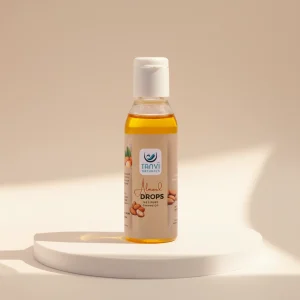
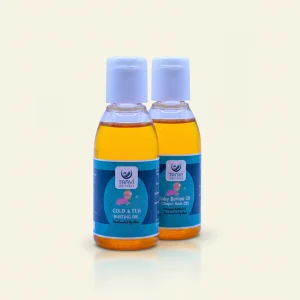
The classic blend is built around cold-pressed coconut oil as the base — antibacterial, anti-inflammatory, and intensely moisturising for delicate skin. Sesame oil, which has been used in Ayurvedic baby care for thousands of years, balances Vata dosha and is deeply warming — especially important in cooler months. Almond oil brings skin-softening fatty acids and mild Vitamin E.
Together, these three oils form the backbone of a massage that does far more than soften skin. Regular massage with the right oils:
- Stimulates blood circulation and lymphatic drainage
- Supports bone and muscle development (this is well-researched, not folklore — studies from touch research institutes show that massaged infants show significantly better weight gain and neurological development)
- Promotes deeper, longer sleep by calming the nervous system
- Strengthens the emotional bond between parent and baby
- Supports digestion — gentle clockwise circles on the tummy are a time-tested remedy for colic and gas
How to do it right:
Warm a small amount of oil in your palms first — never apply cold oil directly to a baby. Use gentle, circular motions on limbs and the back. On the tummy, always move clockwise (the direction of digestion). Avoid the fontanelle (the soft spot on the head) in newborns. Give it at least 20 minutes before bath time.
Do this daily for the first year. You will notice the difference.
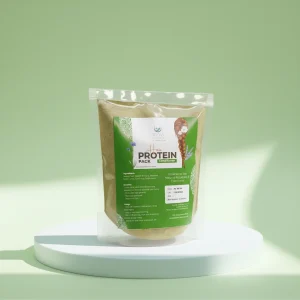
Step 2: The Bath Powder — What Our Great-Grandmothers Used Instead of Soap
In South Indian households especially, manjal (turmeric) and chickpea flour were staples of the baby bath. In North India, it was ubtan — a paste made from gramflour, herbs, and rose water. The regional recipes varied, but the philosophy was the same: bathe the baby with something from the earth, not something from a factory.
Modern baby soaps, even the gentle-sounding ones, almost always contain some form of surfactant. The mildest of these still alter the skin’s natural pH (which should be slightly acidic, around 5.5, to protect against bacteria). Regular soap use in babies pushes the pH alkaline — drying the skin and disrupting its protective barrier.
Herbal bath powders work completely differently. They cleanse through gentle friction and the natural saponins in plants — not chemical foaming agents. They don’t alter skin pH. And the ingredients themselves bring active benefits:
- Green gram (moong dal): One of the mildest natural cleansers. Removes dirt and excess oil without stripping anything the skin needs. Rich in zinc and antioxidants.
- Sandalwood powder: Cooling, anti-inflammatory, naturally antibacterial. Leaves a subtle fragrance that is genuinely calming (not synthetic).
- Turmeric (wild turmeric / kasturi manjal, not kitchen turmeric): Antibacterial, antifungal, brightening. The traditional reason babies were bathed with turmeric was, essentially, to protect their skin from infection — which is exactly what modern science would recommend too.
- Gram flour (besan): Exfoliates gently, absorbs excess oil, leaves skin smooth.
How to use it:
Mix 2–3 teaspoons of bath powder with enough water, rose water, or raw milk to form a paste. Apply gently to baby’s body, leave for a minute, then rinse off with warm water. That’s it. No lather, no rinse-and-repeat, no cartoon-bottle theatrics.
Pro tip: For newborns with particularly sensitive skin or mild rashes, mix the powder with raw cow’s milk instead of water. The lactic acid soothes irritation gently.
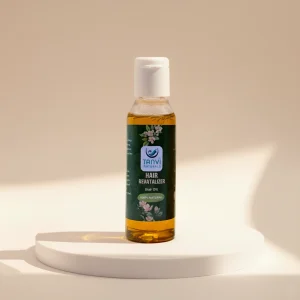
Step 3: The Hair Oil — Yes, Even For Babies With Barely Any Hair
Baby scalp care is one of the most overlooked parts of infant care. New parents often notice cradle cap — those dry, flaky, yellowish patches on the scalp — and aren’t sure what to do.
The answer has always been simple: regular scalp oiling.
A well-formulated baby hair oil does several things simultaneously. It moisturises the scalp, which prevents cradle cap and dry flaking. It nourishes the hair follicles that are just establishing themselves in that first year. And a gentle scalp massage during oil application stimulates circulation to the follicle roots — laying the groundwork for stronger, thicker hair later.
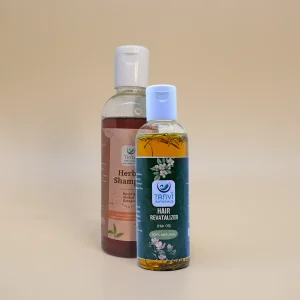
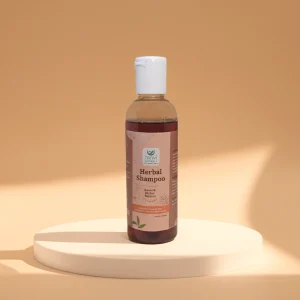
Traditional baby hair oils are typically lighter than body massage oils. The base is usually coconut oil — cooling, deeply nourishing to the scalp, with natural antifungal properties that actively prevent cradle cap. Combined with herbs that feed the follicle from outside, this becomes more than just moisturisation — it’s actual scalp health care from month one.
How to apply:
Warm a few drops between your fingertips. Apply gently to the scalp using your fingertips — never your nails. Move in slow, small circles. There is no need to wash it out immediately — let it sit for at least 30 minutes. You can leave it overnight for deeper nourishment.
Do this 2–3 times a week. If you notice cradle cap, daily application for 1–2 weeks usually resolves it completely.
Why These Three Things, Together, Every Day
Here’s the thing about traditional baby care that modern product marketing never quite captures: it wasn’t about individual products. It was about a ritual.
The oil massage warms and opens the skin. The bath powder cleanses without stripping. The hair oil protects and nourishes the scalp. Each step supports the next. Done consistently, daily or near-daily, they create a cycle of care that keeps the skin barrier strong, the scalp healthy, and the baby calm.
This is what our grandmothers understood intuitively: that consistency and gentleness compound. That you don’t need ten products. You need three good ones, used faithfully.
What To Look For In Each Product (Checklist)
Before you buy anything for your baby’s skin — whether it’s from us or anyone else — here’s what to check:
Massage Oil:
✅ Cold-pressed oil base (coconut, sesame, almond — or a blend)
✅ No mineral oil listed in ingredients
✅ No synthetic fragrance or parfum
✅ Herbal infusions rather than isolated extracts
Bath Powder:
✅ Cornstarch or arrowroot base (not talc)
✅ Recognisable, whole herb ingredients
✅ No added fragrance
✅ Sulphate-free
Hair Oil:
✅ Lightweight (shouldn’t feel heavy or greasy)
✅ Coconut or sesame base
✅ No mineral oil
✅ Scalp-specific herbs
Ready To Start The Ritual?
If you’d like to try all three steps together, our Traditional Baby Care Kit — which includes the Baby Bath Powder, Baby Massage Oil, and Baby Hair Oil — is available here:
👉 Get the Traditional Baby Care Kit
All three products are made from natural, plant-based ingredients — no sulphates, no mineral oil, no synthetic fragrance. Just the same ingredients our grandmothers trusted, made with care.
Have questions about which product suits your baby’s age or skin type? WhatsApp us at +91 88869 00369 — we’re happy to help you figure out the right routine for your little one.
One Thing Worth Saying
The best baby care products in the world are useless without the time and presence you bring to them.
The massage is not just about the oil. It’s about your hands on your baby’s skin — the warmth, the touch, the eye contact. The bath is not just about cleansing. It’s a daily moment of calm and connection.
The ritual matters as much as the recipe.
Your grandmothers knew this. The oil in the steel bowl, the paste on their palms, the unhurried twenty minutes every morning — it was all of it, together.
Come back to that. Your baby will show you why it works.
Questions about how to build a traditional baby care routine from the first week? Drop them in the comments or WhatsApp us at +91 88869 00369 — happy to help you figure out what works for your little one’s skin type and age.